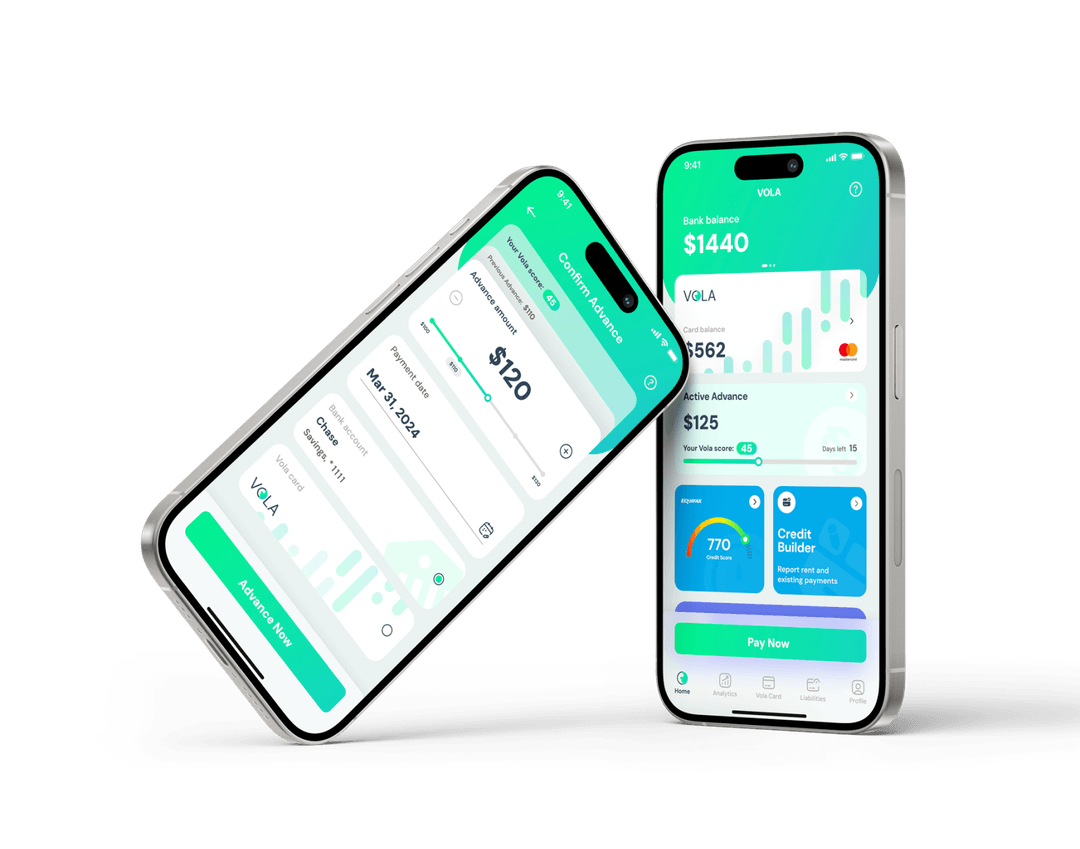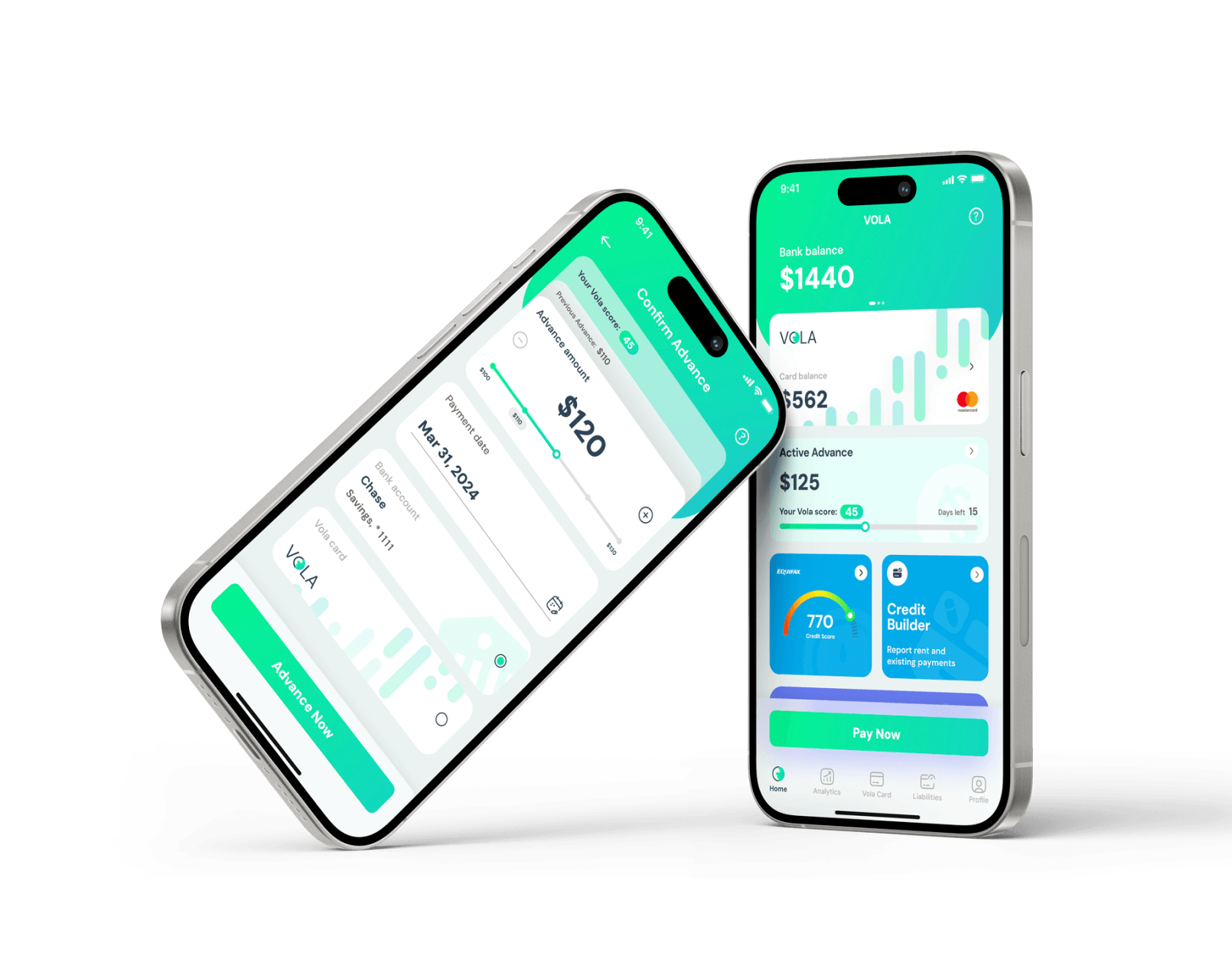
Vola vs Klover: Is Vola a Good Klover Alternative?
Last updated: July 1, 2026
Quick Answer
At a Glance: Vola vs Klover: Is Vola a Good Klover Alternative? Comparison
| Feature | Vola | Klover |
|---|---|---|
| Maximum advance | $500 | $750 |
| Monthly fee | $3.99–$24.99 | $0 (Klover+ $4.99) |
| Fixed income required | No | No |
| Instant transfer fee | Included | $1.99–$16.78 |
| Credit builder | Included | Not included |
| Repayment extension | Yes | Limited (via support) |
| Tipping | None | Data-for-advance model |
| Privacy | Standard | Monetizes user data |
Maximum Advance Amount
Klover's $750 ceiling is higher than Vola's $500. If you occasionally need more than $500, Klover offers a higher cap. The trade-offs are its data-sharing model and per-transfer instant fees, both covered below.
Monthly Fees
Klover's standard service has no monthly subscription — it's free at the point of use. Klover also offers a paid Klover+ tier at $4.99/month that unlocks additional features. Vola charges $3.99–$24.99 depending on tier.
On paper, Klover's standard tier is free. In practice, that free tier's business model depends on data collection and monetization rather than subscription fees — users effectively pay with their data rather than dollars. Whether that's a better deal depends on how you value your data privacy, and Klover may still charge separate express-transfer fees when you want funds instantly.
Fixed Income Requirement
Neither app requires fixed income
Instant Transfer Fees
Vola includes instant transfers in its subscription. Klover charges $1.99–$16.78 for express delivery if you need your advance instantly; standard delivery is free but takes a few business days. For users who regularly need money the same day, these per-transfer fees add up.
Credit Builder
Vola includes credit building. Klover does not include credit building.
Repayment Extension
Vola offers repayment extensions through its standard product. Klover's extension options are limited and typically require contacting customer support.
Tipping Pressure
Klover operates on a data-for-advance model — users complete surveys, view ads, and share data in exchange for points that can increase advance amounts. While framed as voluntary, this creates a structural incentive to share more personal information.
Vola has no equivalent system. The subscription is the price.
Privacy & Data Usage
This is the most important distinction between Vola and Klover. Klover monetizes user data as a core part of its business model, including survey responses and advertising engagement data used to support targeted advertising. This is how the standard app stays free, and Klover discloses it in its privacy policy.
Vola follows standard fintech privacy practices and does not have a business model built on selling user data.
If data privacy is a priority, Vola is the clearer choice. If you're comfortable trading data for a free advance product, Klover may suit you, and its advance cap now reaches $750.
Is Vola a Good Klover Alternative?
Yes, particularly on privacy. Klover offers advances at no subscription cost but monetizes your data and points activity in exchange, while Vola charges a flat subscription and doesn't run on data monetization. If you'd rather pay a clear fee than trade data access, Vola is the more predictable alternative.
Frequently Asked Questions
Is Vola cheaper than Klover?
Klover's standard tier has no monthly fee (a paid Klover+ tier runs $4.99/month), but its business model relies on monetizing user data and it charges $1.99–$16.78 for express transfers. Whether Klover is cheaper depends on how you value your data privacy and how often you need instant funds.
Can I get a cash advance from Klover without direct deposit?
Yes. Neither Klover nor Vola requires fixed income or direct deposit.
Does Vola build credit like Klover?
Vola includes a credit builder. Klover does not include credit building.
Which app offers a larger advance?
Klover, with a maximum of $750 versus Vola's $500. Both depend on eligibility, and most users start lower and qualify for more over time.
Which is better for gig workers?
Both work since neither requires fixed income. Klover offers a higher advance cap ($750 vs Vola's $500), while Vola includes instant transfers and credit building and does not monetize user data.
Does Vola charge tips?
No. Vola has no tipping. Klover operates on a data-for-advance model, which is a different trade-off than traditional tipping.
Final Verdict: Should You Choose Vola or Klover?
Choose Vola if data privacy matters to you, or you want included instant transfers and credit building without trading your personal data or paying per-transfer fees. Choose Klover if you're comfortable trading personal data for a free advance product and want access to a higher advance cap of up to $750.